Your Clients Meet Your Firm. Nothing Else.
“White label” usually means a logo slot. Pental means it literally: every surface a client can see, from the address bar to the report on their desk, carries your identity and only yours. On every plan.
The Address Bar Says You.
Your portal runs at portal.yourfirm.com, or any hostname you own. The first thing a client checks before typing credentials is the domain, and the domain is yours.
A Sign-in Page That Could Only Be Yours.
The sign-in page is the most security-conscious moment a client has with your firm. It renders with your logo, your colours and your background, on your domain, so nothing about it teaches clients to trust an unfamiliar name.
- Your compositionLogo, colours, background and wording are yours to set, for the sign-in page specifically as well as the application behind it.
- Sign-in options, your policyEmail and password with a mandatory second factor by default, Google and Microsoft SSO if you want them, or emailed one-time codes if your policy prefers passwordless.
- Both themesLight and dark render from your palette, so the page is on-brand whichever the client's system prefers.
The same page, three firms
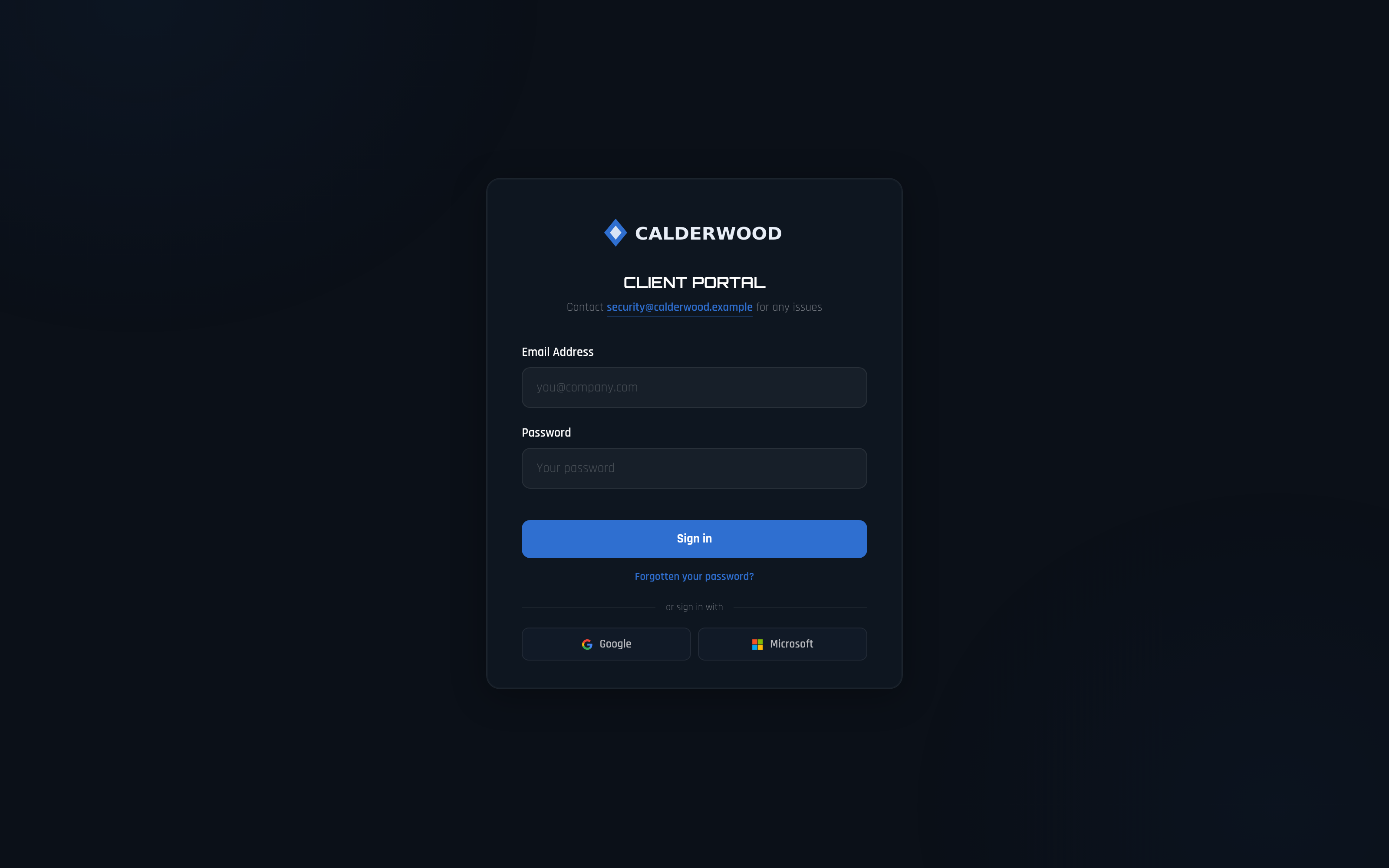
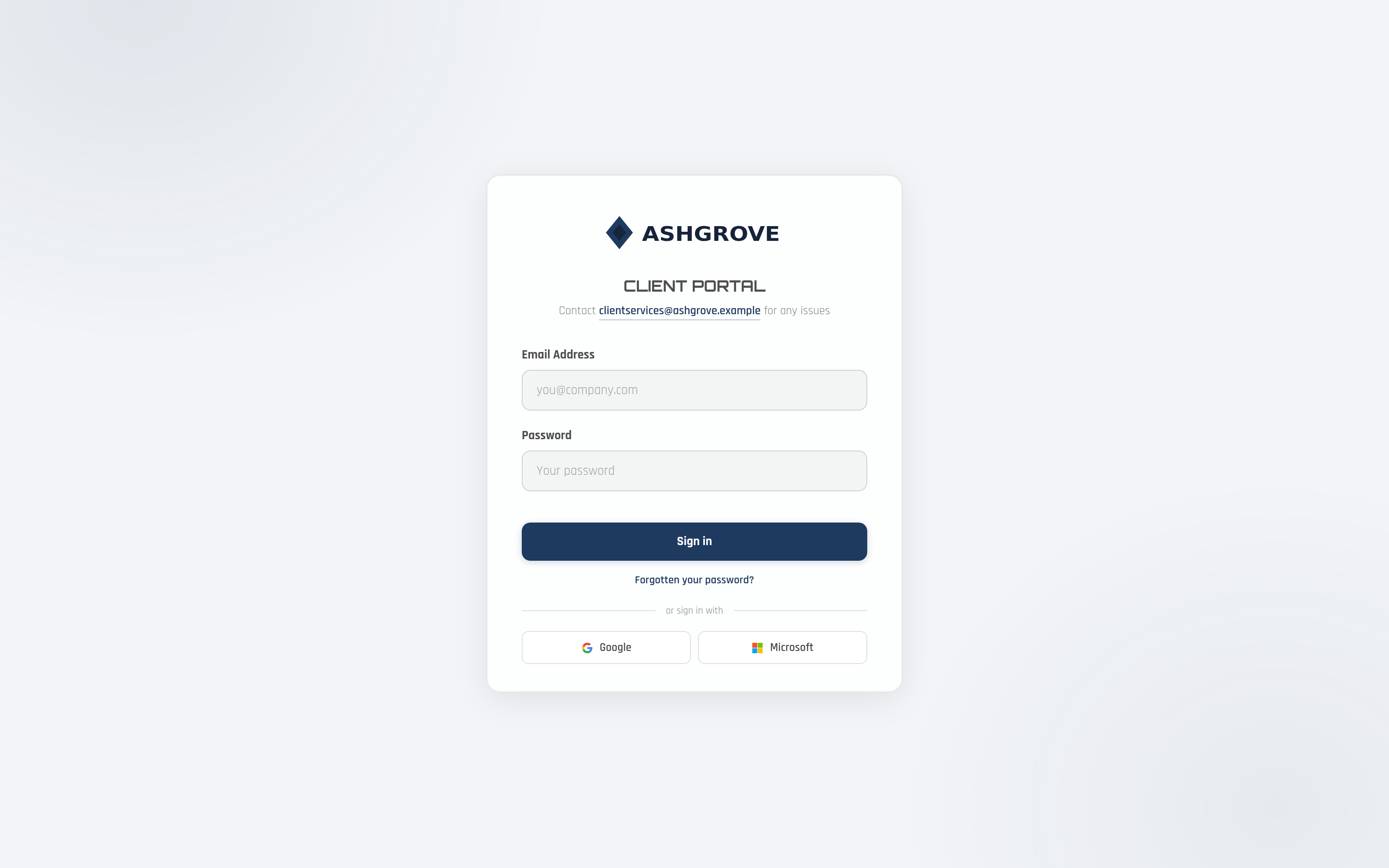
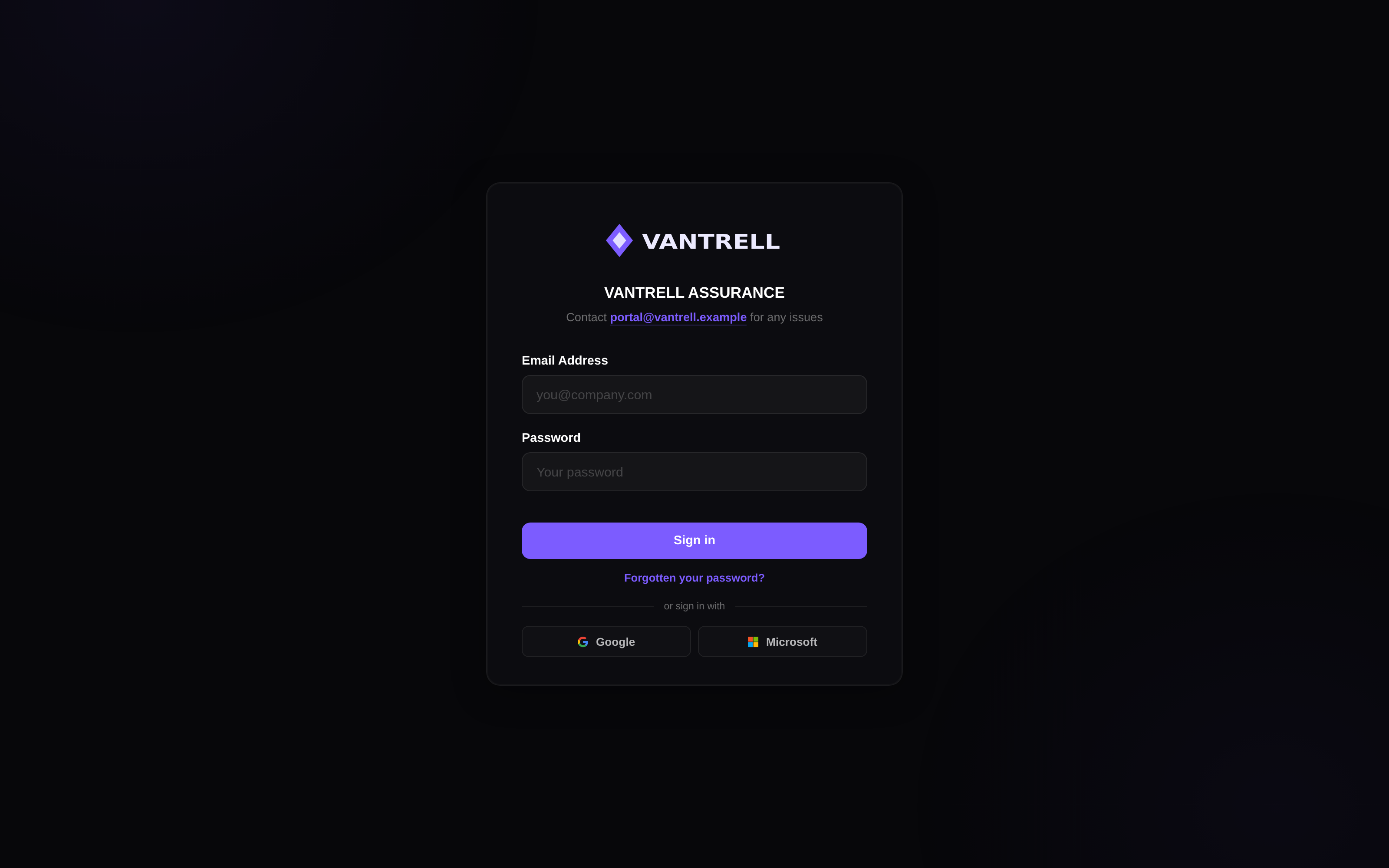
Calderwood Security What their client signs in toDemonstration portals. The four firms are invented; every screen is the real software.
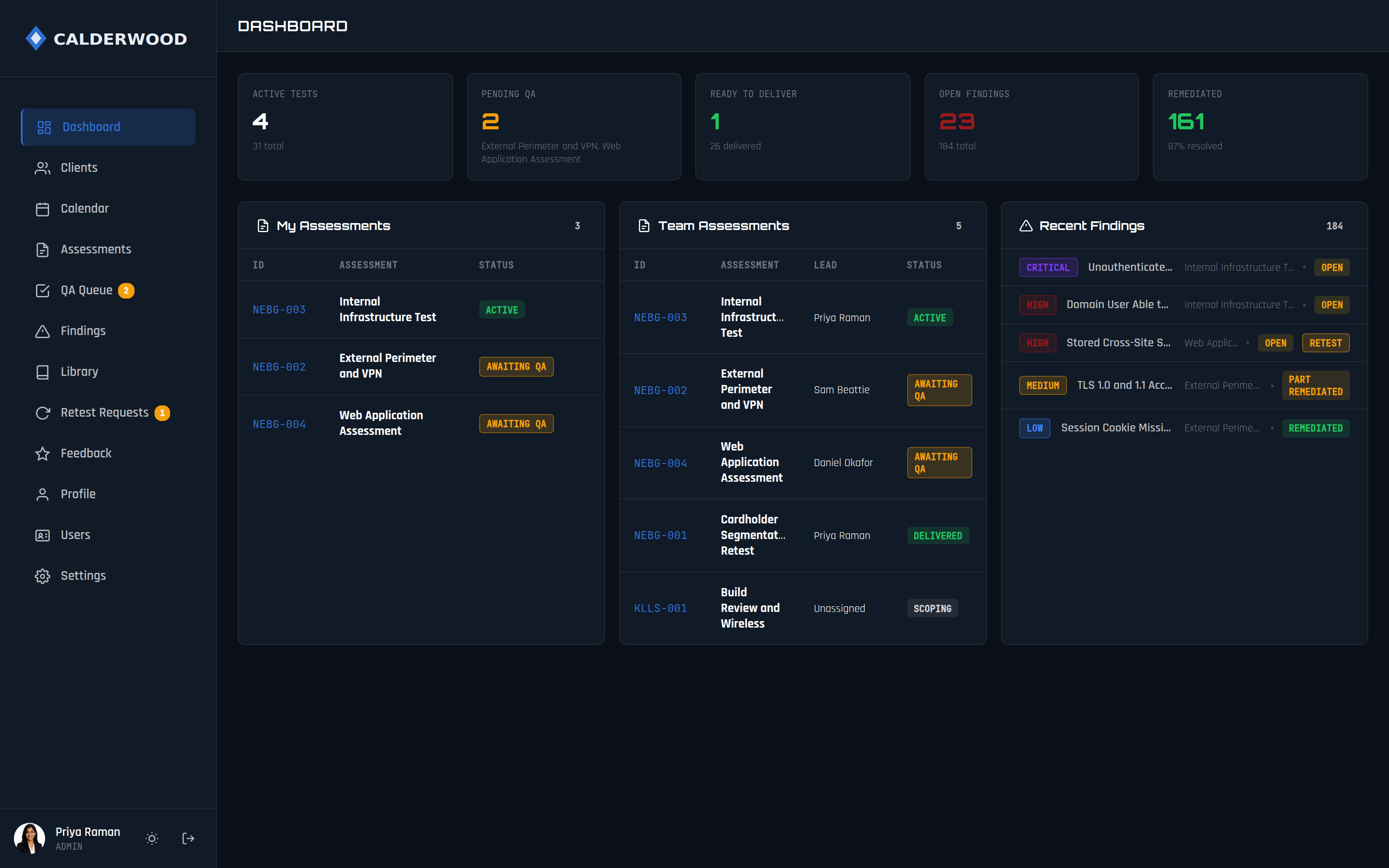
Inside, It Still Says You.
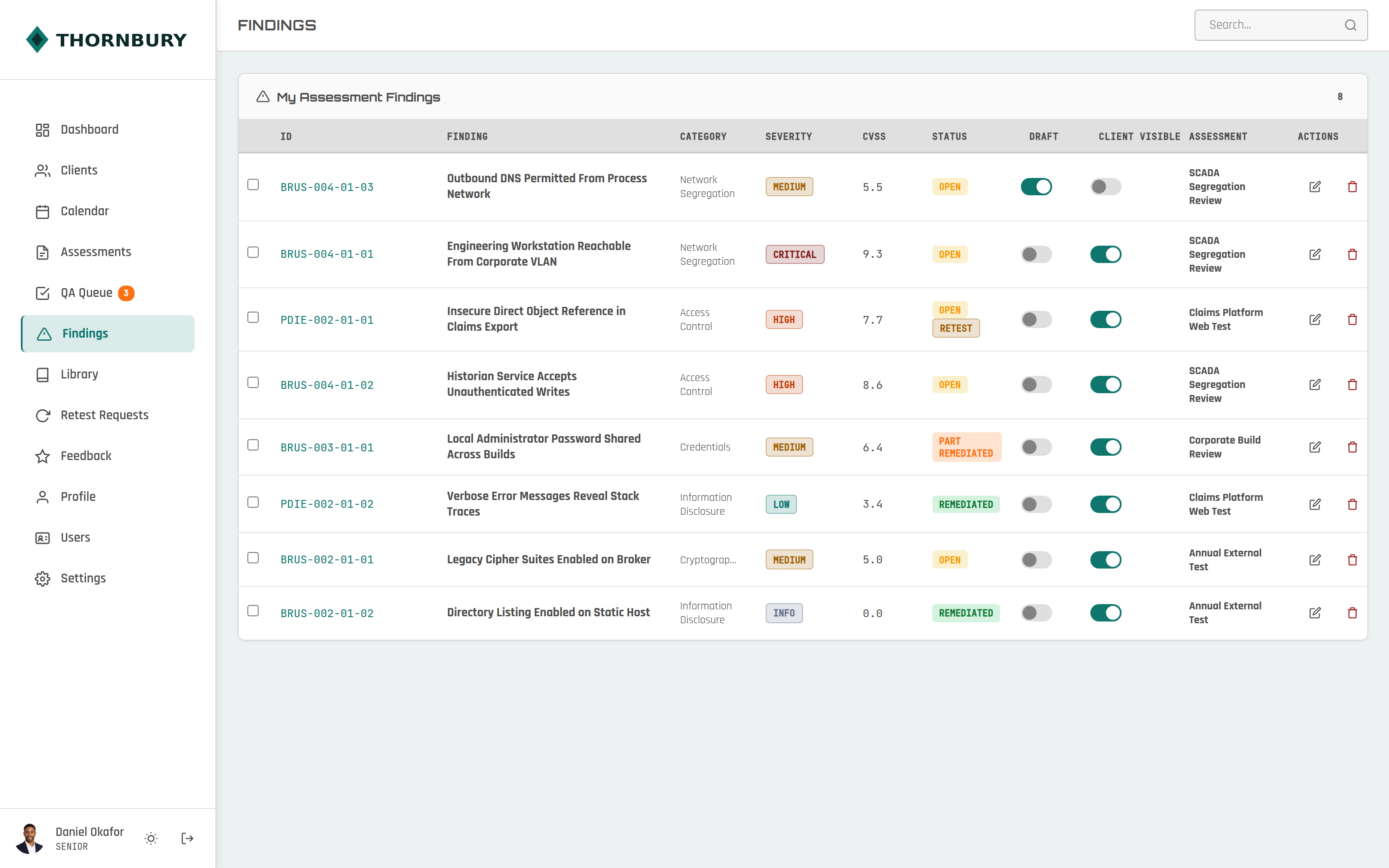
Branding that stops at the login page is a costume. The application itself runs on your design tokens, for your team and your clients alike.
Email from Your Address, Through Your Infrastructure.
Portal invitations, scope requests, credential requests and report releases all arrive from you@yourfirm.com, sent through your own relay. Not a lookalike sender, and not a shared pool that shapes your deliverability.
Documents That Are Literally Yours.
The report is the artefact your client keeps, forwards and files. It renders from the Word template you already send, so it is not similar to your report, it is your report.
- Your own document templatesYour report and your attestation letter each render from the DOCX you send today, with your cover page, styles, headers and appendices untouched.
- Mapped onceUpload the document you send today and the platform maps its placeholders, tables and sections to live data. Nobody hand-assembles a report again.
- Deterministic outputThe same engagement produces the same file every time. Two reports a quarter apart differ only in their findings, which is exactly what a returning client expects.
- Named your wayGenerated files follow your naming convention, so what lands in the client's inbox already matches their filing.
Every Surface Says Your Firm, and Only Your Firm.
White-labelling is defined by what is not there. There is no badge in the corner, no “powered by” in the footer, no vendor name in the email footer and no upsell shown to your clients, on any plan.
A client should be able to complete an entire engagement, fill in scoping, hand over credentials, read the findings as they are released, take the report to their board and request a retest, without ever encountering evidence that your platform was not built in-house. If a surface fails that test, it is a bug.
Where your branding, colours and templates are stored, and why we could not leak them if we wanted to, is covered on the ownership page
Put Your Name on It Today.
Domain, colours and email are set from the portal in about five minutes, and your own report template goes in whenever it suits you. Seven day free trial, no card, full white-labelling from the first minute.